
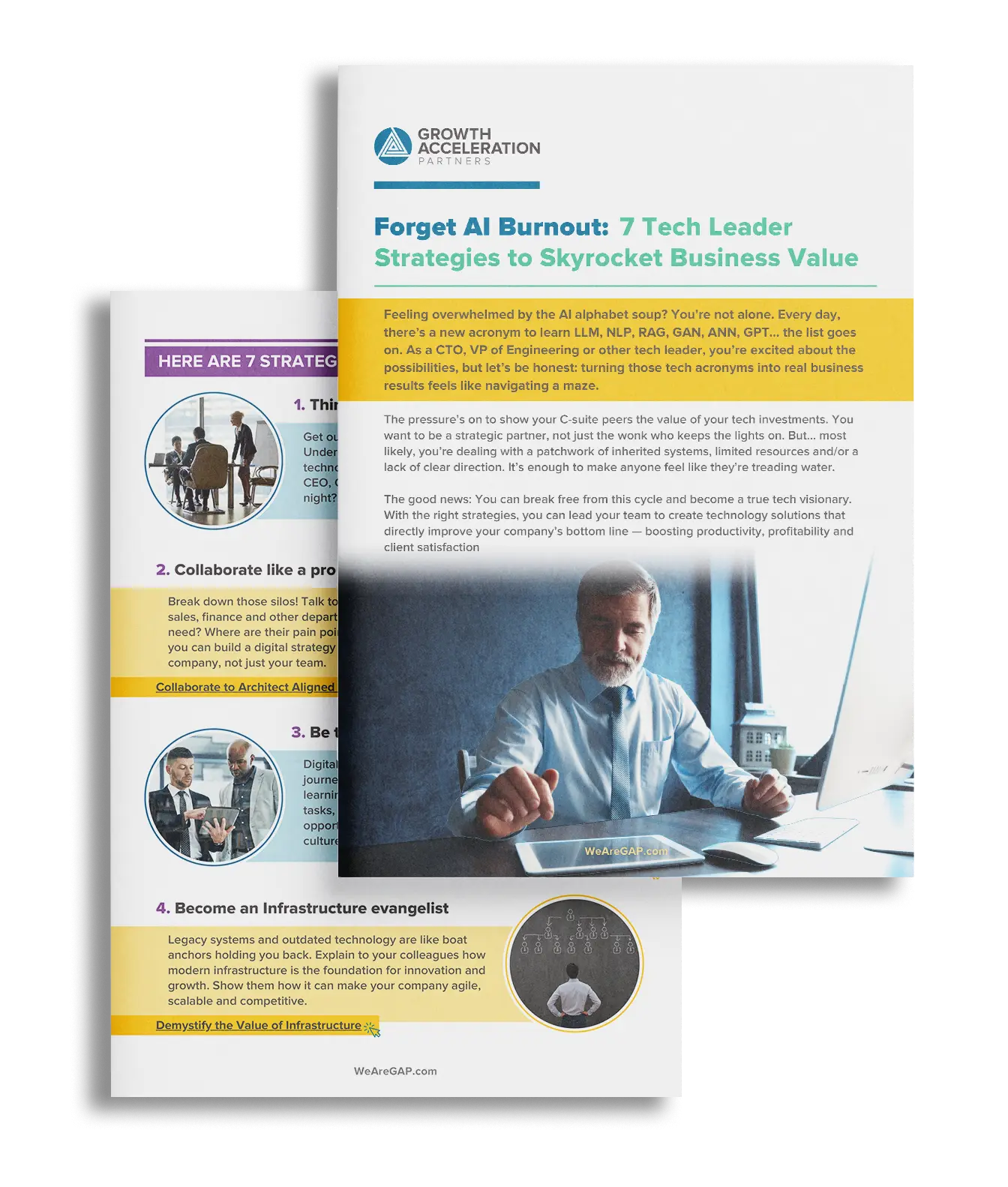
Forget AI Burnout 7 Tech Leader Strategies to Skyrocket Business Value
About This Document
Feeling overwhelmed by the constant flux of AI innovations? This guide empowers tech leaders to navigate complexities and drive substantial business outcomes. Discover actionable strategies to enhance productivity, profitability, and client satisfaction, transforming tech challenges into opportunities for growth and innovation.
Full Content Below
Read the Full Document
Explore the complete publication below

Feeling overwhelmed by the AI alphabet soup? You’re not alone. Every day, there’s a new acronym to learn LLM, NLP, RAG, GAN, ANN, GPT… the list goes on. As a CTO, VP of Engineering or other tech leader, you’re excited about the possibilities, but let’s be honest: turning those tech acronyms into real business results feels like navigating a maze.
The pressure’s on to show your C-suite peers the value of your tech investments. You want to be a strategic partner, not just the wonk who keeps the lights on. But… most likely, you’re dealing with a patchwork of inherited systems, limited resources and/or a lack of clear direction. It’s enough to make anyone feel like they’re treading water.
The good news: You can break free from this cycle and become a true tech visionary. With the right strategies, you can lead your team to create technology solutions that directly improve your company’s bottom line — boosting productivity, profitability and client satisfaction
HERE ARE 7 STRATEGIES TO HELP YOU MAKE IT HAPPEN:

1. Think like a CEO (not just a CTO)
Get out of the weeds and step into the boardroom. Understand your company’s big-picture goals and how technology helps achieve them. Be proactive: talk to your CEO, CIO and other executives. What keeps them up at night? And how can technology solve their problems?
Be a Strategic Leader
2. Collaborate like a pro
Break down those silos! Talk to leaders in marketing, sales, finance and other departments. What do they need? Where are their pain points? By working together, you can build a digital strategy that benefits the entire company, not just your team.
Collaborate to Architect Aligned Strategies
3. Be the Digital Transformation champion
Digital transformation isn’t a one-and-done project — it’s a journey. So develop a long-term plan that uses AI, machine learning and other leading-edge technology to automate tasks, streamline processes and open up new business opportunities. And don’t forget the humans! Foster a culture of innovation within your team.
Deliver On Digital Transformation
4. Become an Infrastructure evangelist
Legacy systems and outdated technology are like boat anchors holding you back. Explain to your colleagues how modern infrastructure is the foundation for innovation and growth. Show them how it can make your company agile, scalable and competitive.
Demystify the Value of Infrastructure

5. Put customers at the center
Customers expect a seamless digital experience. Work with marketing and sales teams to understand customer needs and requirements. Then use technology to create personalized solutions that delight them.
Engage With Customers
6. Communicate, communicate, communicate
Transparency is key. Regularly share updates with stakeholders on your projects and initiatives. Highlight the positive impact your work has on the business — not just in terms of nerdy, technical jargon, but in real-world results like happier employees and more engaged clients.
Communicate and Maintain Visibility
7. Get a helping hand
Need a boost? Growth Acceleration Partners can help you create custom solutions, speed up implementation and make the most of your resources. We’ll work side-by-side with your team to make sure your tech investments deliver real value.
Leverage a Strategic Partner to Bridge Talent GAPS
Don’t let AI burnout hold you back. With the right strategies and a little (or a lot!) of help from GAP, you can make technology the driving force for your company’s success.
Also, if you want to take a deeper dive into this topic, check out GAP’s white paper, 7 Actionable Strategies to Deliver Value, which includes some more specific strategies, real-world challenges and client success stories.